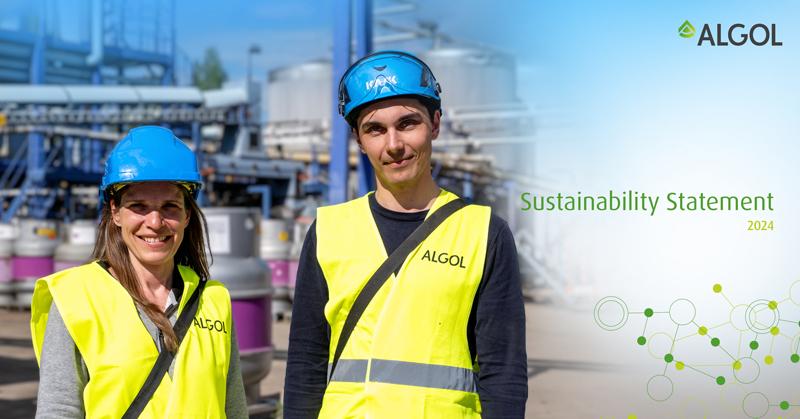
The Algol Group’s 2025 Sustainability Report has been published and provides a comprehensive overview of the Group’s sustainability actions. The voluntary report has been prepared with reference to the structures and principles of the European Sustainability Reporting Standards (ESRS).
A key achievement in 2025 was the completion of double materiality assessments at those Group companies where this had not yet been done. These assessments form a strong foundation for identifying material impacts, risks and opportunities and for developing sustainability work on a business-specific basis. The material sustainability topics presented in the Algol Group’s Sustainability Report are based on the impacts, risks and opportunities identified in these assessments.
We are committed to developing sustainability and transparency
Algol published its first sustainability report in 2022, and since then we have been systematically developing our sustainability reporting practices.
“Voluntary reporting reflects our commitment to long-term development and increased transparency. I would like to express my warmest thanks to all Algol employees and partners for your cooperation and success in 2025,” says Joakim Flinck, CEO of Algol Group
View the Sustainability Report.
Further information:
Tor Edgren, Sustainability Manager, Algol Oy, t. +358 50 525 7625
Tuulikki Suihkonen, Communications Manager, Algol Oy, t. +358 50 3467 248
Algol in brief
Algol is a family-owned business and multi-branch group with more than 130 years of experience in international trade. Our Group companies import, market and manufacture products for industry and the healthcare sector. In addition, companies offer services related to their business areas, such as design services, tailored delivery solutions, and installation, maintenance and training services. We are building a successful and sustainable future for our partners. Algol employs over 500 experts in nine different countries.
 The new POLE-POLD1 assay for the Idylla™ system enables molecular diagnostics of endometrial carcinoma directly from an FFPE section in just 95 minutes. This ultra-fast analysis supports prognostic assessment and treatment stratification already at the early stages of care. Endometrial cancer is the fourth most common cancer among women in Finland, and molecular profiling is an essential part of its diagnostics.
 The test is based on 16S rRNA gene sequencing of bacteria in the endometrial lining, enabling species-level identification of the microbiome composition. The result report includes a detailed analysis of both beneficial Lactobacillus species and potentially disruptive pathogenic bacteria.